


Indian Tailoring: The Craft, The Business, and The Modern Revival
Introduction
Indian tailoring is more than garment construction; it is a living system of craftsmanship, cultural continuity, and commercial adaptation. In an era dominated by fast fashion and standardized sizing, the demand for precision-fit clothing is resurging. Consumers are questioning mass-produced garments that rarely fit perfectly and increasingly seeking personalized attire that reflects identity, comfort, and longevity.
This shift presents both a challenge and an opportunity. The tailoring sector must modernize without diluting heritage skills. This blog explores how Indian tailoring evolved, how it operates as a business ecosystem, and why it is positioned for a strong revival in the digital economy.
The Legacy and Structure of Indian Tailoring
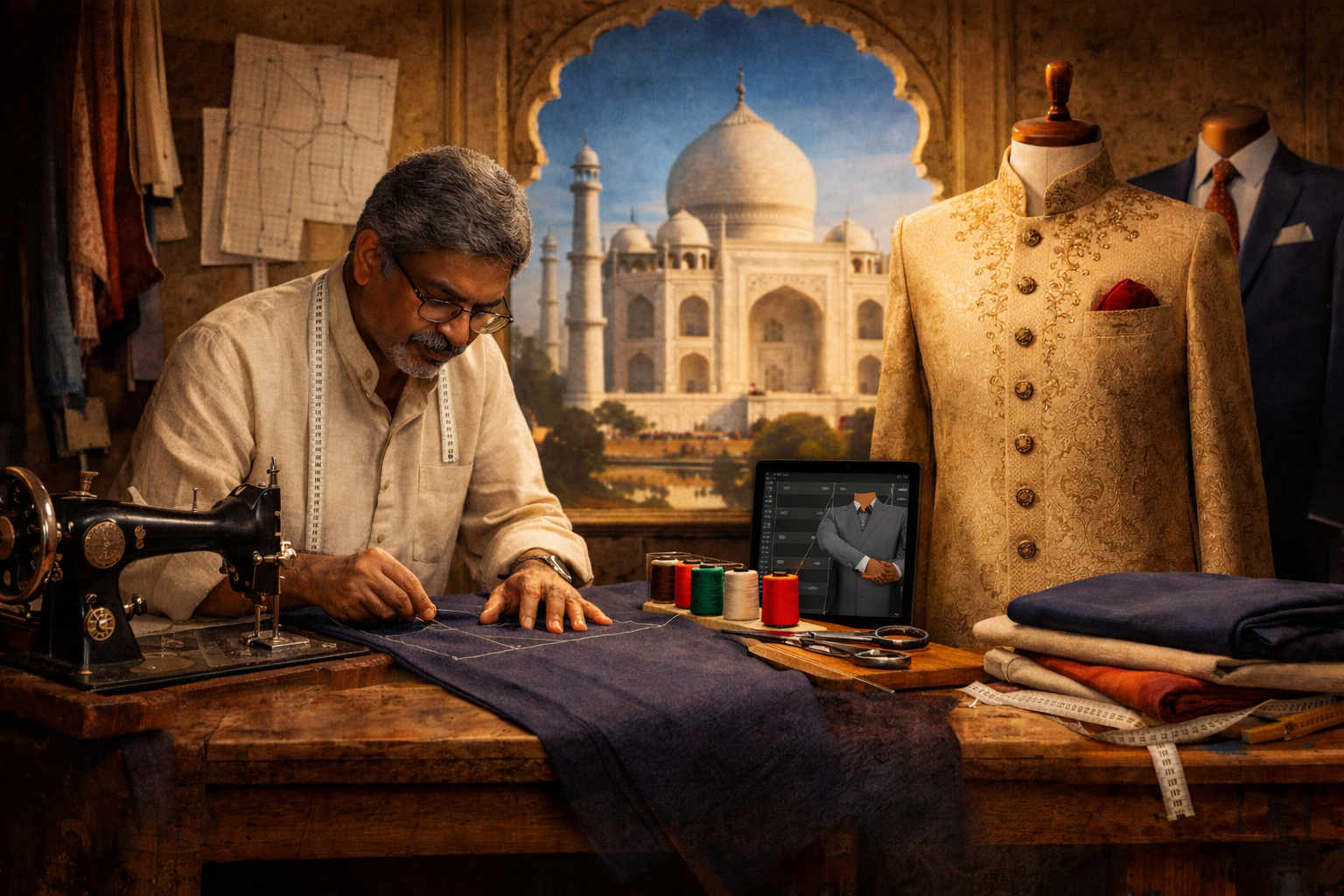
At its core, Indian tailoring grew from community-based artisan systems. Traditional master tailors operated from small workshops, often training apprentices for years before entrusting them with client measurements. Precision was not optional; it was the foundation of reputation.
Historically, tailoring in India was deeply connected to regional garments. From sherwanis and bandhgalas in the north to bespoke blouses and traditional attire in the south, craftsmanship was shaped by cultural context. Measurements were recorded manually, pattern drafting was done on paper, and fabric cutting required years of practice to minimize waste.
Unlike Western tailoring models that focused on suits, Indian tailoring adapted to complex silhouettes such as layered ethnic wear, heavily embroidered fabrics, and asymmetrical cuts. These garments demanded technical expertise in draping, reinforcement stitching, and structural finishing.
Today, the structure of the industry remains largely fragmented. According to sectoral estimates, over 80% of tailoring businesses operate in micro or small formats. While this ensures localized service, it also limits scalability, digital adoption, and standardized quality systems.
Yet, this fragmentation is also the industry’s strength. It allows hyper-personalization at a level mass manufacturing cannot replicate.
Indian Tailoring in the Modern Fashion Economy
The modern apparel industry is shifting toward personalization. Data from global retail studies suggests that over 40% of consumers prefer customized clothing when price difference is reasonable. Fit dissatisfaction is one of the primary reasons for garment returns in e-commerce.
This is where Indian tailoring regains relevance.
Digital measurement tools, online appointment scheduling, and doorstep alteration services are redefining how tailoring businesses operate. Urban consumers now expect convenience alongside craftsmanship. The tailoring ecosystem is gradually integrating:
Digital order management systems
AI-driven measurement assistance
Fabric visualization tools
Mobile-based customer communication
Small tailoring units are also collaborating with designers and boutique labels to provide backend production support. This hybrid model increases revenue potential without requiring large marketing budgets.
Another critical shift is the demand for sustainable fashion. Custom tailoring reduces overproduction and waste. Instead of producing 1,000 identical pieces, garments are crafted to order, extending lifecycle and minimizing landfill impact.
For emerging entrepreneurs, Indian tailoring offers a low-capital entry point compared to manufacturing units. With skilled labor and focused branding, niche specialization—such as bridal wear, men’s formalwear, or corporate uniforms—can command premium pricing.
Technology, Skill, and Operational Efficiency
While tradition built the foundation, scalability depends on process optimization.
A professional tailoring unit today requires:
Accurate measurement protocols
Standardized pattern libraries
Quality control checkpoints
Fabric handling systems
Time-bound delivery workflows
Operational inefficiencies often arise from inconsistent measurement recording and poor inventory management. Digital transformation solves these gaps.
For instance, cloud-based client measurement records eliminate repeated measurement errors. Production tracking software helps prioritize urgent orders. Even simple CRM systems can increase repeat orders by 20–30% through reminders and seasonal promotions.
Skill development remains central. The future of Indian tailoring depends on upgrading artisan capabilities to include:
Advanced pattern drafting
Fabric science knowledge
Machine maintenance
Customer consultation skills
Institutions offering vocational training in fashion technology are slowly bridging this gap. However, independent tailors must actively invest in skill enhancement to remain competitive against designer boutiques and ready-to-wear brands.
The Business Model Behind a Successful Tailoring Unit
A profitable tailoring business is not driven solely by sewing skill. It requires structured positioning.
There are three dominant models emerging:
Neighborhood Service Model
Focuses on alterations, routine wear, and loyal local customers. Revenue is stable but limited by geography.
Boutique Custom Model
Targets premium clientele with bespoke garments. Higher margins, lower order volume, greater brand emphasis.
Digital Aggregator Model
Connects multiple tailors through an online platform offering doorstep service and standardized pricing.
Margins vary significantly depending on specialization. Bridal tailoring, for example, can command margins above 40%, while routine alteration services operate on high volume and lower margins.
Customer experience is equally crucial. Transparent pricing, trial fittings, and timely delivery directly influence retention rates. Data indicates that repeat customers account for more than 60% of revenue in established tailoring businesses.
Marketing has also evolved. Social media portfolios showcasing finished garments, client testimonials, and behind-the-scenes craftsmanship build trust. Professional branding elevates perception from “local tailor” to “custom clothing specialist.”
Why Indian Tailoring Has a Competitive Advantage Globally
Global fashion markets increasingly value craftsmanship. Bespoke tailoring in cities like London and Milan commands premium pricing due to heritage and hand-finishing standards.
Indian tailoring possesses similar technical depth but remains under-leveraged internationally.
Advantages include:
Highly skilled labor at competitive costs
Deep experience in handling diverse fabrics
Expertise in complex ethnic silhouettes
Strong cultural design heritage
With proper branding and export alignment, Indian tailoring businesses can capture niche global markets. Diaspora communities, wedding markets, and cultural festivals abroad present consistent demand.
However, international scalability requires compliance with sizing standards, shipping logistics, and digital marketing precision. Entrepreneurs who integrate craftsmanship with global digital outreach can build strong niche brands.
Challenges Hindering Industry Growth
Despite its strengths, several structural issues limit growth:
Informal operations without documentation
Lack of standardized pricing models
Limited access to finance
Inconsistent quality control
Many tailoring businesses remain cash-based and unregistered, restricting their access to loans and partnerships. Without structured bookkeeping, scaling becomes difficult.
Another challenge is generational transition. Younger generations often prefer corporate jobs over artisanal trades. Without modernization and financial stability, skilled craftsmanship risks decline.
The solution lies in repositioning tailoring as a professional, technology-enabled service sector rather than an informal trade.
The Future Outlook
The revival of slow fashion, increasing awareness about sustainability, and dissatisfaction with generic sizing create favorable conditions for Indian tailoring.
Entrepreneurs who combine:
Digital ordering systems
Strong branding
Structured quality processes
Skilled craftsmanship
will lead the transformation.
Tailoring is no longer merely about stitching fabric; it is about delivering personalized identity with precision and reliability.
Conclusion
The evolution of Indian tailoring reflects resilience, adaptability, and unmatched craftsmanship. From community-based artisans to digitally enabled service models, the industry stands at a pivotal moment. Businesses that embrace technology, structured operations, and premium positioning will not only survive but lead.
The future of Indian tailoring belongs to those who treat it not just as a skill, but as a scalable, brand-driven enterprise.
Share: